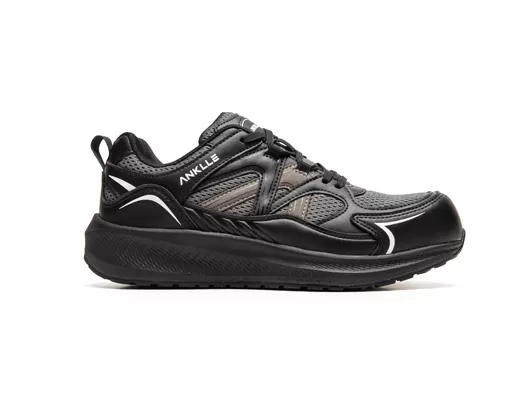
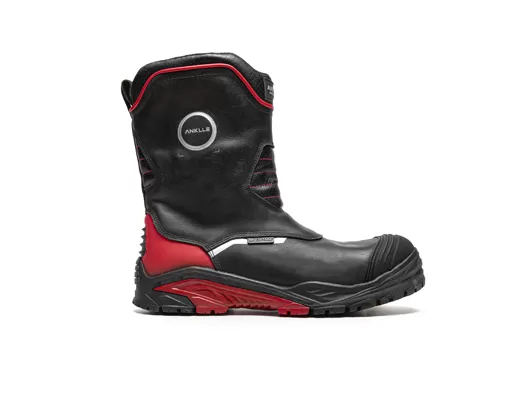
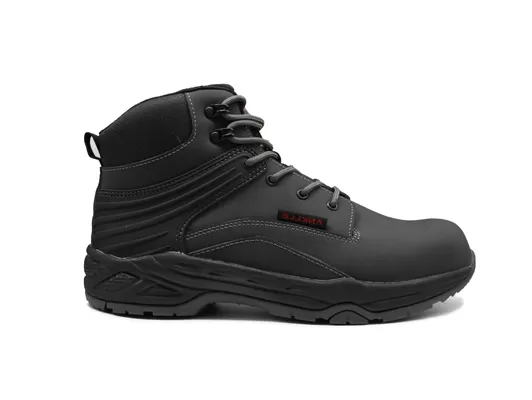
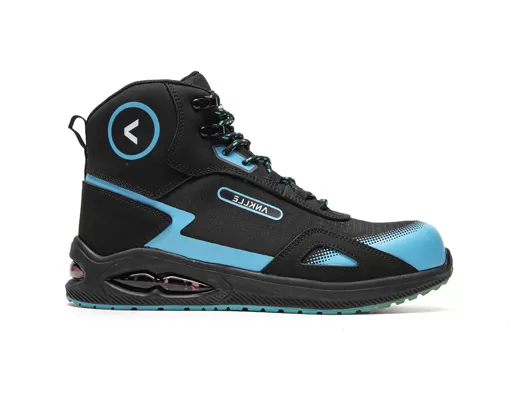
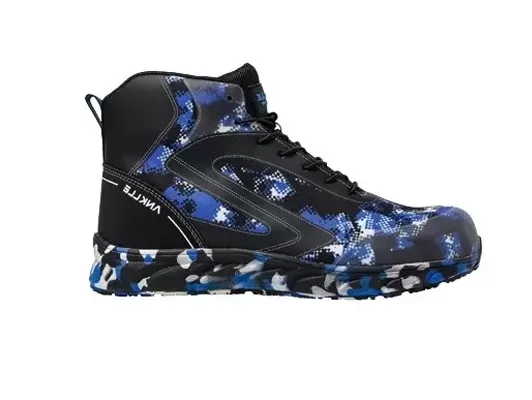
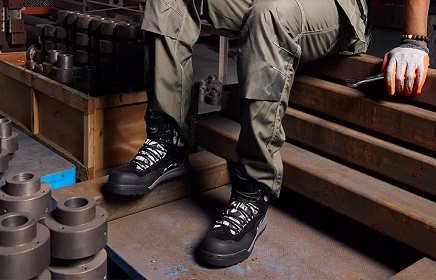
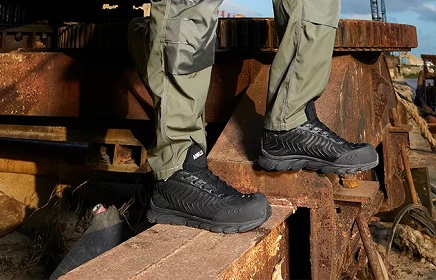
When workers face rain, standing water, muddy ground, sharp debris or other demanding outdoor hazards, ordinary work shoes may not provide enough protection. s7s safety shoes are designed for this type of environment by combining safety toe protection, puncture resistance and water resistance within one EN ISO 20345 footwear classification.
For buyers, however, understanding the S7S marking is important before choosing a product. S7S is not simply a stronger version of S3S. It represents a specific combination of protection requirements, including a non-metallic PS puncture-resistant insert and water resistance of the complete footwear. The exact protection provided by a particular model should still be confirmed through its certification and product specifications.
The distinction is especially useful for purchasers searching for waterproof safety footwear or waterproof puncture proof shoes. By understanding what S7S actually means, buyers can compare footwear more accurately and determine whether it fits construction, chemical, oil and gas, outdoor or other industrial applications.
What Does S7S Mean in Safety Footwear?
S7S is a safety footwear classification under the EN ISO 20345:2021 framework. ISO describes EN ISO 20345 as a standard covering basic and additional requirements for general-purpose safety footwear, including protection against mechanical and other specified risks.
The S7S classification combines the performance characteristics associated with S3S with water resistance of the complete footwear. The final “S” identifies the PS type of non-metallic puncture-resistant insert, which is tested using a smaller test nail than the PL method.
In practical purchasing terms, an S7S product is expected to provide a combination of:
Safety toe protection
Antistatic properties and heel energy absorption as part of the underlying safety class
PS-type non-metallic puncture resistance
Cleated outsole characteristics associated with S3S
Water resistance of the complete footwear
This combination makes s7s safety shoes particularly relevant when both penetration hazards and wet conditions are present. Instead of selecting separate footwear characteristics one by one, buyers can start with the S7S classification and then check additional markings required for their particular workplace.
It is also important not to confuse S7S with S7, S7L or S3S. The suffix identifies the type of puncture-resistant insert, while the base class determines the broader protection package.
What Protection Does S7S Safety Footwear Provide?
The biggest advantage of S7S is that it combines several forms of protection for environments where workers may encounter both wet conditions and sharp objects.
For example, a construction worker may walk across wet ground containing nails or metal fragments. An offshore worker may face water exposure while working around equipment and industrial components. A chemical plant operator may need footwear that provides protection against wet floors while also supporting everyday industrial safety requirements.
S7S can therefore be particularly useful when the work environment demands more than basic toe protection.
Water resistance deserves special attention. Under the current classification structure, S7S is associated with water resistance of the entire footwear rather than simply a water-resistant upper. This is one of the key distinctions between S7S and classes such as S3S.
Puncture protection is another important element. S7S uses the PS type of non-metallic puncture-resistant insert. This can be advantageous when lightweight and flexible safety footwear is preferred over designs using traditional metal inserts.
For purchasers comparing waterproof safety footwear, the S7S marking can therefore be a useful starting point, but it should not replace checking the manufacturer's certification, construction and additional protection markings.
S7S vs. S3S vs. S1PS: Key Differences
S7S, S3S and S1PS all provide safety toe protection and can incorporate non-metallic PS puncture resistance, but they are intended for different environmental conditions.
Safety Class | Safety Toe | Puncture Resistance | Water Protection | Best Application |
S1PS | Yes | PS | No waterproof requirement | Dry indoor workplaces |
S3S | Yes | PS | Water-resistant upper | Construction and mixed environments |
S7S | Yes | PS | Water resistance of complete footwear | Wet outdoor and demanding industrial work |
The key difference is the level and location of water protection. S1PS is primarily suited to dry environments where puncture resistance is important. S3S adds resistance to water penetration and absorption of the upper, while S7S goes further by incorporating water resistance of the complete footwear.
This makes S7S particularly relevant for workers who regularly operate outdoors or in wet environments. However, buyers should still evaluate the complete product specification because additional performance characteristics can vary between models.
How Is Waterproof Performance Evaluated for S7S Safety Shoes?
Water protection is not simply a marketing feature. It is connected to defined performance requirements within the footwear classification system.
S7S is associated with water resistance of the complete footwear, while S3S addresses water penetration and absorption resistance of the upper. This difference is significant when selecting footwear for environments where water exposure can occur around the entire shoe rather than only on the upper surface.
The construction of the footwear therefore matters. Materials, seams, membranes, tongue construction, sole attachment and overall shoe design can all influence how effectively water is kept away from the foot.
A useful example is ANKLLE's AK24173. The product page identifies it as an ANKLLE S7S SR FO model with a waterproof membrane lining, composite toe cap and KEVLAR midsole rated at ≥1100N for puncture resistance. It is also listed as EN ISO 20345 S7S SR FO compliant.
For buyers, this demonstrates why the classification should be considered together with the actual construction and additional product markings.
How to Choose S7S Safety Shoes for Different Industries
S7S footwear is particularly valuable when a workplace combines wet conditions, sharp-object hazards and the need for everyday industrial protection. Different industries may prioritize different additional characteristics.
For construction and outdoor maintenance, buyers may focus on water protection, puncture resistance and slip performance. In oil and gas environments, fuel resistance, slip resistance and material durability may also become important. Chemical processing environments may require additional assessment of footwear materials and workplace-specific chemical hazards.
When selecting s7s safety shoes, consider:
Work environment: Determine whether employees face rain, standing water, mud, sharp debris or oily surfaces.
Puncture hazards: Confirm that PS puncture protection matches the actual objects workers may encounter.
Additional markings: Check whether SR, FO, HRO, LG, HI or other optional properties are needed for the application.
Construction materials: Evaluate the upper, membrane, toe cap, midsole and outsole according to comfort and durability requirements.
Certification: Confirm the applicable EN ISO 20345 classification and product documentation.
ANKLLE offers an S7S safety footwear range for industrial applications, including models such as AK23006-A, AK23006-G, AK23101, AK23168, AK23139-B, AK23149 and AK24173.
For example, AK24173 combines a waterproof membrane, composite toe cap and KEVLAR puncture-resistant midsole, making it a useful reference for buyers evaluating lightweight protection for wet and demanding work environments.
Buyers can explore ANKLLE's S7S Safety Shoes range to compare available models and specifications. For broader classification information, the company's Safety Shoes EN ISO 20345 range can also help buyers evaluate different safety footwear categories.
S7S Safety Shoes FAQs
Are S7S safety shoes waterproof?
S7S requires water resistance of the complete footwear under the relevant classification. Individual product construction and documentation should still be checked.
Are S7S shoes puncture resistant?
Yes. S7S incorporates PS-type non-metallic puncture resistance as part of its classification.
Is S7S better than S3S?
Not universally. S7S is more suitable when water resistance of the complete footwear is required, while S3S may be sufficient for other environments.
What does PS mean in S7S?
PS identifies the non-metallic puncture-resistant insert and its corresponding test method using a smaller test nail.
What additional markings should buyers check?
Depending on the workplace, buyers may need to check markings such as SR, FO, HRO or LG in addition to the S7S classification.