View More
European Standard Composite Toe Cap
Impact protection against nails and screws


Safety or work shoes are Personal Protective Equipment (PPE) designed and manufactured to protect the worker's feet from various risks: mechanical (slipping, impact, compression, puncture, cutting etc.), chemical (contact with hydrocarbons, mineral oils etc.), physical (moisture, water, heat, cold etc.) and electrical (antistatic properties, conductive properties etc.).


There are countless pairs of safety boots a person could choose to wear to do their job, however some require something a little more specific than others.
Clearly, some environments are more demanding in terms of PPE than others.
For example, a general construction worker shall require steel toecap safety boots, however, they should also consider penetration-resistance, as they are likely to be working around nails as well as other construction materials.
On the other hand, an oil construction worker shall be working in an environment where slip hazards are likely to appear around the site, and therefore would be obliged to work in oil-resistant safety boots.
Style, price, durability, and practicality are a fine fraction of factors to consider with safety boots.
Although the style or even the price might be right for what you are looking for, when it comes to safety boots, quality is majorly important for securing your safety in the workplace. That's why it is important to check that the pair you are buying or wearing has an adequate certification.
It is not often easy to find safety boots based on your requirements because of difficulty understanding its code - known as the Safety Footwear Code.
Footwear in accordance with EN ISO 20345 is intended to protect the wearer from bumps, crushing, falling or rolling objects, from walking into sharp or pointed objects, heat or cold, and hot substances.
Selecting suitable safety shoes is crucial for ensuring workplace safety and comfort. Here are the key points to consider:

Chemical Exposure:
Choose shoes with chemical-resistant materials.
Electrical Hazards:
Opt for non-conductive or electrically insulated shoes.
Slippery Surfaces:
Look for shoes with slip-resistant soles.
Heavy Objects:
Steel-toe or composite-toe shoes can protect against falling objects.
Sharp Objects:
Puncture-resistant soles are essential.

OSHA Compliance:
Ensure the shoes meet Occupational Safety and Health Administration (OSHA) standards.
ASTM Standards:
Look for shoes that comply with ASTM International standards for impact and compression resistance.
EN ISO Standards:
For European standards, check for EN ISO 20345 certification.

Leather:
Durable and offers good protection.
Synthetic Materials:
Lightweight and often more breathable.
Rubber:
Excellent for waterproofing and chemical resistance.

Proper Sizing:
Ensure the shoes fit well to avoid blisters and discomfort.
Arch Support:
Look for shoes with good arch support to prevent foot fatigue.
Cushioning:
Adequate cushioning can enhance comfort, especially for long hours of wear.

Quality Construction:
Check for well-constructed shoes with reinforced stitching.
Easy Maintenance:
Choose materials that are easy to clean and maintain.

Breathability:
Shoes with breathable linings can help keep feet dry.
Waterproofing:
Essential for wet environments.
Insulation:
Necessary for cold environments to keep feet warm.
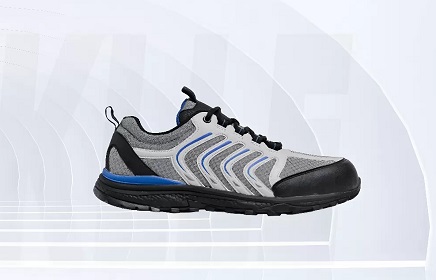
Model: Composite Toe (EN20345Standard)

European Standard Composite Toe Cap
Impact protection against nails and screws

Puncture-proof midsole

Slip-resistant,oil-resistant, and abrasion-resistant outsole(SR rated)

Cushioned outsole for comfort 200J impact resistance

Breathable upper material

Water-repellent upper material
Keeps feet dry in rain or puddles

Anti-static insoleKevlar midsole and soleESD protection(0.1-35MΩ)

Special and stylish heel design
Elastic shoelace system for convenience

Anti-odor lining Time-saving elastic laces