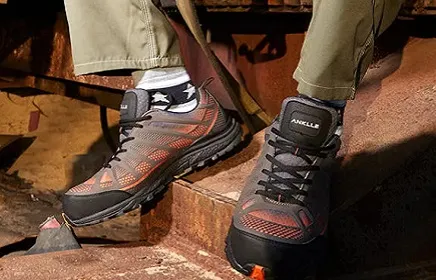
Sharp nails, metal fragments, screws and other pointed objects can create serious foot injuries in construction, manufacturing, warehousing and maintenance environments. For workers exposed to these hazards, choosing anti puncture safety shoes requires more than simply looking for the word “puncture resistant” on a product description. The type of protective midsole and the applicable test method can significantly affect how footwear performs.
Under the EN ISO 20345 safety footwear standard, puncture resistance is identified through classifications such as P, PL and PS. Although these ratings all address penetration hazards, they are not interchangeable. P generally refers to footwear using a metal puncture-resistant insert, while PL and PS are associated with non-metal inserts and different test conditions.
Understanding these differences makes it easier for buyers to select protective footwear according to actual workplace risks. It is also important to remember that puncture resistance is only one part of workplace protection. Users looking for waterproof puncture proof shoes, for example, must separately verify whether the footwear provides water resistance in addition to puncture protection.
Why Puncture Resistance Matters in Safety Footwear
Puncture hazards can occur anywhere workers walk over unfinished floors, construction debris, discarded metal components or sharp industrial materials. A conventional work shoe may provide comfort and abrasion resistance but still leave the sole vulnerable to penetration.
A puncture-resistant midsole creates a protective barrier between the outsole and the worker's foot. Depending on the footwear design, this barrier may be manufactured from steel or a flexible non-metal material such as aramid fiber or another high-performance textile.
The choice affects more than protection. Midsole material can influence footwear weight, flexibility, comfort and suitability for different working environments. For this reason, anti puncture safety shoes should be selected based on both the hazard and the way workers move throughout the day.
For example, workers who spend most of their time in heavy industrial environments may value the established protection of a metal insert, while construction or warehouse workers may prefer lightweight non-metal solutions that offer greater flexibility.
What Do P, PL and PS Mean?
P, PL and PS represent different puncture-resistance classifications under the modern safety footwear system. The key distinction is the protective insert material and the test method used to evaluate penetration resistance.
P is traditionally associated with a metal puncture-resistant insert. Metal inserts provide a rigid barrier against penetration and have been widely used in industrial safety footwear. However, they can increase footwear weight and may make the sole less flexible.
PL refers to puncture resistance using a non-metallic insert tested with a larger test nail. Non-metal protective layers can be lighter and more flexible than traditional steel inserts, while the PL test evaluates resistance against a relatively larger penetration object.
PS also uses a non-metallic puncture-resistant insert, but the test focuses on penetration by a smaller nail. This distinction is important because a material that performs well against a larger nail does not necessarily behave identically when exposed to smaller sharp objects.
Therefore, PL and PS should not simply be viewed as different names for the same type of protection. They represent different testing conditions that can help buyers assess the suitability of non-metal puncture-resistant footwear for particular workplace hazards.
How Are P, PL and PS Puncture Tests Different?
The testing approach is central to understanding the difference between these ratings. The protective insert is placed between the outsole and the foot area and exposed to a defined penetration test. The test evaluates whether the insert can resist penetration under specified conditions.
The three classifications can be summarized as follows:
P: Metal puncture-resistant insert using the traditional puncture test approach.
PL: Non-metal puncture-resistant insert tested against a larger test nail.
PS: Non-metal puncture-resistant insert tested against a smaller test nail.
Non-metal protection is particularly relevant to modern lightweight safety footwear. Materials such as textile composites can provide flexibility across the sole while maintaining resistance to sharp-object penetration.
For manufacturers developing composite toe puncture resistant boots, combining a composite toe cap with a non-metal puncture-resistant midsole can create a lighter overall design than footwear using steel in both protective areas. This can be beneficial for workers who walk, climb stairs or squat repeatedly during a shift.
However, test classification should never be treated as a complete substitute for workplace hazard assessment. The actual size, shape and frequency of sharp-object hazards should always be considered before selecting footwear.
P vs. PL vs. PS: Safety Footwear Puncture Resistance Compared
A direct comparison helps clarify which classification may fit different applications.
Rating | Midsole Type | Test Nail Type | Protection Focus | Typical Use |
P | Metal puncture-resistant insert | Standard test nail | Traditional puncture protection | Heavy industrial work |
PL | Non-metal puncture-resistant insert | Larger test nail | Broad-area puncture resistance | Warehouses and construction |
PS | Non-metal puncture-resistant insert | Smaller test nail | Protection against smaller sharp objects | Construction and manufacturing |
The most suitable classification depends on the hazard profile rather than simply choosing the highest-sounding rating. Metal inserts can provide robust penetration protection, while PL and PS solutions can offer advantages in flexibility and weight.
PS is especially relevant when the workplace may expose workers to smaller sharp objects. PL, meanwhile, addresses a different penetration test involving a larger nail. Buyers should therefore review the applicable certification and test information rather than assuming PL automatically provides the same protection against every type of sharp object.
Water resistance is another separate consideration. A puncture-resistant rating does not automatically make footwear waterproof. If workers operate outdoors or in wet conditions, buyers should look for products that combine appropriate puncture resistance with the required water-resistant classification.
How to Choose Anti Puncture Safety Shoes for Your Workplace
The right protective footwear should begin with a clear assessment of the working environment. Consider where employees walk, what sharp objects they may encounter and how much flexibility and mobility the job requires.
For heavy industrial operations, a metal P-rated insert may be appropriate where robust traditional puncture protection is a priority. In construction, logistics and manufacturing, non-metal PL or PS solutions may offer a useful balance between penetration resistance, flexibility and reduced weight.
Other footwear characteristics should also be evaluated, including:
Toe protection and whether a steel or composite toe cap is preferred
Puncture-resistant midsole material
Slip resistance and outsole performance
Antistatic requirements
Water resistance for outdoor or wet workplaces
Weight, flexibility and long-term wearing comfort
For buyers looking for waterproof puncture proof shoes, it is particularly important to evaluate waterproofing and puncture resistance separately. A product should meet the specific requirements of both hazards rather than relying on one classification to cover all workplace risks.
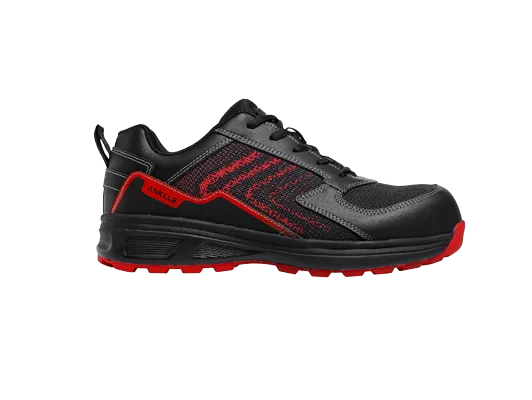
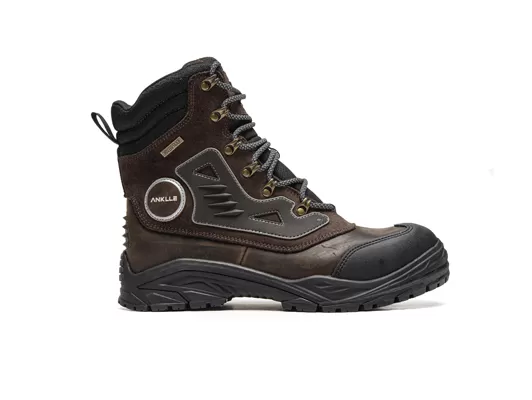
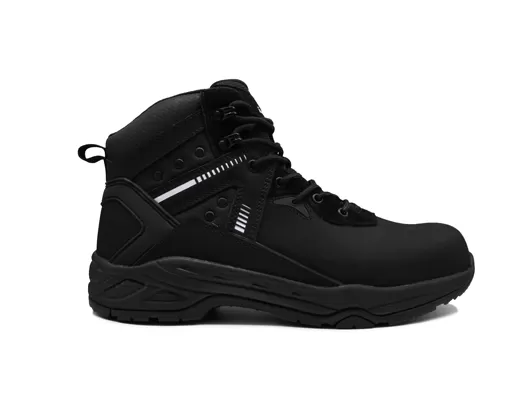
ANKLLE's safety footwear range includes models designed around modern EN ISO 20345 requirements, including S1PS products featuring composite toe protection and KEVLAR puncture-resistant midsoles. These constructions can be considered where lightweight protection and mobility are important.
For a broader overview of protective footwear classifications and product options, buyers can also explore ANKLLE's Safety Shoes EN ISO 20345 range and compare protection features according to their working conditions.
Safety Footwear Puncture Resistance FAQs
Is P better than PL or PS?
Not necessarily. P, PL and PS use different protective materials and testing methods, so the appropriate choice depends on the workplace hazard.
What is the main difference between PL and PS?
Both use non-metal puncture-resistant inserts, but they are tested with different nail sizes. PL uses a larger test nail, while PS evaluates smaller nail penetration.
Are non-metal midsoles better than steel midsoles?
They can be lighter and more flexible. The best choice depends on the required protection level, working conditions and wearer comfort.
Does puncture resistance mean the shoes are waterproof?
No. Puncture resistance and water resistance are separate performance requirements and should be evaluated independently.
When should puncture-resistant footwear be replaced?
Footwear should be inspected regularly and replaced when the outsole, protective insert, upper or other safety components show significant damage or wear.