Choosing the right safety footwear requires more than checking whether a shoe has a protective toe cap. Different workplaces expose workers to different hazards, including falling objects, sharp metal fragments, nails and uneven industrial surfaces. Understanding safety classifications helps companies select footwear that provides the correct level of protection.
For buyers searching for waterproof puncture proof shoes, it is important to understand that S1PS safety footwear focuses primarily on toe protection and puncture resistance. The S1PS rating itself does not automatically mean the footwear is waterproof. Water resistance depends on additional product features, such as upper materials, construction methods and specific waterproof ratings.
As part of the EN ISO 20345 safety footwear standard, S1PS represents an updated safety category designed for workplaces requiring reliable puncture protection. By understanding S1PS features, testing methods and application scenarios, buyers can make better decisions when selecting industrial protective footwear.
What Does S1PS Mean in Safety Footwear?
S1PS is a safety footwear classification defined under the EN ISO 20345 standard. It combines several protective requirements into one rating, helping users identify the basic performance level of a pair of safety shoes.
The meaning of S1PS can be explained through each component:
S: Indicates safety footwear with essential protection features, including a protective toe cap, antistatic properties and heel energy absorption.
1: Represents a basic safety category with a closed heel area and additional protection functions suitable for indoor and general industrial environments.
P: Refers to puncture resistance, meaning the footwear includes a protective layer designed to reduce the risk of sharp objects penetrating the sole.
S: Represents the updated small nail puncture resistance test method for non-metal protective inserts.
Unlike traditional safety categories, S1PS places greater emphasis on modern puncture protection technologies. Many S1PS safety shoes use lightweight composite materials instead of traditional steel components, improving comfort while maintaining protection.
For workers exposed to sharp objects, anti puncture safety shoes with an S1PS classification can provide an effective balance between safety, flexibility and everyday wearability.
It is also important to understand that S1PS is not the same as waterproof footwear. A product marketed as waterproof puncture proof shoes must be checked for both puncture protection and water resistance performance separately.
What Protection Features Are Included in S1PS Safety Footwear?
S1PS safety footwear combines multiple protective functions to support workers in industrial environments. While exact designs vary between manufacturers, typical S1PS shoes include several important safety features.
Common protection features include:
Protective toe cap: The toe area is reinforced to protect against impact and compression hazards. Many modern designs use composite toe caps that provide protection while reducing overall shoe weight.
Puncture-resistant midsole: A protective layer prevents sharp objects from penetrating through the outsole. Some advanced models use KEVLAR puncture-resistant midsoles for lightweight protection.
Antistatic performance: The footwear helps reduce static electricity accumulation, which is important in many industrial workplaces.
Heel energy absorption: This feature improves comfort and reduces impact stress during long periods of standing or walking.
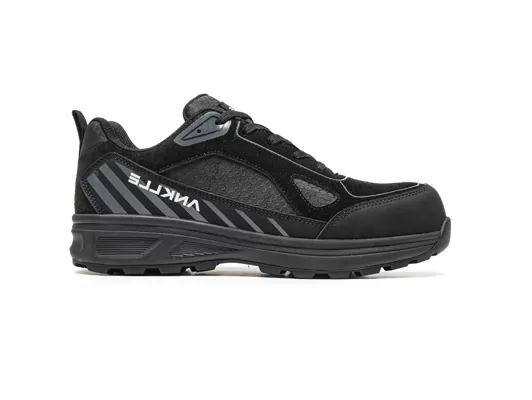
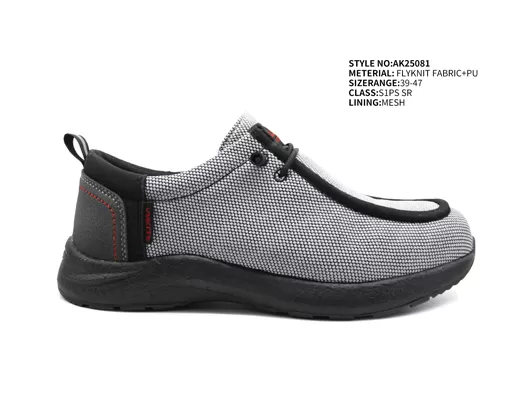
ANKLLE’s S1PS safety footwear products are designed around these protection requirements. Some models use composite toe caps combined with KEVLAR puncture-resistant midsoles, with the puncture resistance performance of the protective layer reaching ≥1100N according to product specifications.
For industries requiring lightweight protection and improved mobility, composite toe designs are increasingly becoming an alternative to traditional steel toe safety footwear.
How Is S1PS Safety Footwear Tested?
Safety footwear classifications are based on standardized testing procedures. The EN ISO 20345 safety footwear standard defines the requirements and test methods used to evaluate protective performance.
For S1PS footwear, key tests focus on toe protection and puncture resistance.
The puncture resistance test evaluates whether the protective insert can prevent penetration from small nails. Compared with older testing methods, the updated S1PS classification focuses on small nail resistance using non-metal protective layers.
Manufacturers also evaluate:
These tests help ensure that safety footwear provides consistent protection in real working conditions.
When selecting composite toe puncture resistant boots, buyers should review certification information, protective materials and product specifications rather than relying only on marketing descriptions.
S1PS vs. S1P vs. S1PL: What Is the Difference?
Different safety classes provide different levels of protection. Understanding their differences helps users choose footwear according to workplace hazards.
Safety Class | Toe Protection | Puncture Resistance | Water Resistance | Typical Applications |
S1P | Yes | Yes | Not required | Dry industrial workplaces |
S1PL | Yes | Small-nail resistance | Not required | Warehouses and light industry |
S1PS | Yes | Small-nail resistance | Not required | Construction and industrial work |
S3S | Yes | Small-nail resistance | Water-resistant upper | Outdoor and wet workplaces |
The main difference between S1P and S1PS is related to updated puncture resistance testing requirements. S1PS is designed for small nail resistance using non-metal protective inserts, making it suitable for modern safety footwear designs.
S1PL and S1PS both focus on puncture protection, but the testing methods differ. S3S provides additional protection against water penetration because it includes water-resistant upper requirements.
Therefore, users searching for waterproof puncture proof shoes should not assume S1PS alone provides waterproof performance. They should check whether the product includes additional water-resistant features.
Where Are S1PS Safety Shoes Commonly Used?
S1PS safety shoes are suitable for workplaces where workers need protection against sharp objects while maintaining comfort and mobility.
Typical applications include:
Construction sites where nails, metal fragments and debris may create puncture risks
Manufacturing facilities with sharp components or industrial waste
Warehouses and logistics areas where floor hazards may occur
Maintenance and repair operations involving metal parts and tools
Light industrial environments requiring daily safety footwear
Compared with heavier traditional safety shoes, S1PS models with composite toe caps and lightweight puncture-resistant materials can provide improved comfort for workers who spend long hours walking or standing.
ANKLLE provides S1PS safety footwear solutions designed for industrial applications where protection, comfort and durability are required. Customers can explore the S1PS Safety Shoes product range to compare different materials, designs and protection features.
For workplaces requiring broader compliance information, the Safety Shoes EN ISO 20345 product category also helps users understand different safety classifications and application requirements.
S1PS Safety Footwear FAQs
Is S1PS safety footwear waterproof?
No. S1PS does not automatically indicate waterproof performance. Water resistance depends on additional product specifications.
What does the “P” in S1PS mean?
The “P” represents puncture resistance, indicating that the footwear includes protection against sharp object penetration.
Are S1PS shoes suitable for construction work?
Yes. S1PS shoes are commonly used in construction and industrial environments where puncture hazards exist.
Are composite toe caps safer than steel toe caps?
Both provide protection. Composite toe caps are often chosen for lighter weight and better comfort.
What should I check before buying S1PS safety shoes?
Check certification, toe protection type, puncture-resistant material, workplace requirements and any additional water-resistant features.